Department of Agric Technology
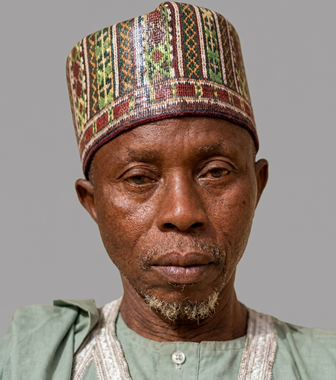
Mal. Abdulmumini Abdulkadir
Department of Agricultural Technology
The Department of Agricultural Technology was established in 2010 being the oldest Department in the school of Agricultural Technology. Academic activities started in the Department with Certificate programme in Agricultural Technology in 2010/2011 Academic Session’. In 2013/2014 academic session, NBTE granted approval for the department to run National Diploma in Agricultural Technology.
In April 2014, the school system was introduced in the polytechnic with three school namely; School of Engineering Technology (SET), School of Science and Technology (SST) and School of Management Technology (SMT) headed by Deans. Department of Agricultural Technology fall under SET.
On 30th October, 2018 new academic programs were introduced in the polytechnic. Department of Agricultural Technology was splited into four namely: Department of Agricultural Technology, Department of Agricultural & Bio-Environmental Engineering Technology, Department of Animal Health and Production and Department of Crop Production Technology.
Goals and Objectives
The National Diploma in Agriculture is designed to produce agricultural technicians who are self – reliant, skilled and capable of adopting modern techniques in agricultural Production.
Objectives
A product of ND in Agricultural Technology should be able to:
- Establish agricultural farm enterprises in crop, animal and fish production;
- Employ modern techniques in apiary, floriculture and micro-livestock (e.g. Rabbits, cane rat and snailery), quails and pigeons’ production.
- Employ modern techniques in the production of animal feeds.
- Assist in processing, storage and marketing of agricultural produce.
- Assist in pest and disease control.
- Carry out Agricultural Extension services
- Carry out field survey involving land measurements and field layout.
Entry Requirements
The general entry requirements for the ND Agricultural Technology programme are:
- Five credits level passes in WAEC or NECO and NABTEB in not more than two sittings. The subjects must include Biology/Agricultural Science, Chemistry and any three of the following: Geography, Mathematics, Economics, Technical Drawing, Physics and English language. At least, a pass in English language and Mathematics is compulsory.
- Candidates who have successfully completed the Board have recognized pre-National diploma (Science &Technology) course may be admitted into the Programme. Such students must have passed Biology/Agricultural science, Chemistry, Mathematics, English language and any one of the following subjects: Economics, Technical Drawing, Physics and Geography at WASC, SSSC, GCE O’Level or NECO and NABTEB before undertaking the course.
Admission Requirements
- SSCE/GCE/NECO with credits in English, Mathematics, Physics, Chemistry and Agricultural Science/Biology.
- ND holders in related disciplines may be considered for HND entry.
- Successful applicants must pass departmental screening and meet the institution's general admission rules.
Structure of Programme
The National Diploma Agricultural Technology is a two-year Programme i.e. four semesters of classroom, laboratory, field and workshop activities in the Polytechnic/College. Three months Supervised Industrial Work Experience Scheme (SIWES) shall be carried out at the end of each year of the Programme. Each semester shall be of 17 weeks duration made up as follows: 15 Contact weeks of teaching, i.e. recitation, practical exercises, quiz, tests, etc and 2 weeks for examination and registration.
Conditions of Award
Institutions offering accredited Programmes will award the National Diploma to candidates who successfully completed the Programme after passing prescribed course work, examinations, diploma project and the supervised industrial work experience. Such candidates should have completed a minimum of between 72 and 80 semester credit units depending on the Programme.
Evaluation Scheme
The National Diploma Agricultural Technology Examination must be externally moderated. In grading the students, theory shall constitute 50% while Practical is 50%.
Diplomas shall be classified as follows:
Distinction - GPA of 3.50 and above
Upper Credit - GPA of 3.00 - 3.49
Lower Credit - GPA of 2.50 - 2.99
Pass - GPA of 2.00 - 2.49
Fail - GPA of below - 2.00
Curriculum
The curriculum of the ND programme consists of three main components. These are:
- General Studies / Education
- Foundation Courses
- Professional Courses
Accreditation
Each programme offered at ND Level shall be accredited by the NBTE before the diplomates can be awarded the Diploma Certificates. Details about the process of accrediting a programme for the award of the ND are available from the Executive Secretary, Programmes Department, National Board for Technical Education, Plot B, Bida Road, P.M.B. 2239, KADUNA, Nigeria.
Guidance Note for Teachers Teaching the Programmes
The new curriculum is drawn in unit courses. This is in keeping with the provisions of the National Policy on Education which stresses the need to introduce the semester credit units which will enable a student who so wish to transfer the units already completed in an institution of similar standard from which he is transferring.
In designing the units, the principle of the modular system by product has been adopted; thus, making each of the professional modules, when completed provides the student with technician operative skills, which can be used for employment purpose.
As the success of the credit unit system depends on the articulation of Programme between the institutions and industry, the curriculum content has been written in behavioural objectives, so that it is clear to all the expected performances of the student who successfully completed some of the courses or the diplomats of the Programme. There is a slight departure in the presentation of the performance-based curriculum which requires the conditions under which the performance is expected to be carried out and the criteria for the acceptable levels of performance. It is a deliberate attempt to further involve the staff of the department teaching the Programme to write their own curriculum stating the conditions existing in the institution under which the performance can take place and to follow that with the criteria for deferring an acceptable level of performance. Departmental submission on the final curriculum may be vetted by the Academic Board of the institution.
Our aim is to continue to see to it that a solid internal evaluation system exists in each institution for ensuring minimum standard and quality of education in the programmes offered throughout the polytechnic system.
The teaching of the theory and practical work should, as much as possible be integrated. Practical exercises, especially those in professional courses and laboratory work should not be taught in isolation from the theory. For most courses, there should be a balance of theory to practice in the ratio of 50:50 or 60:40 or the reverse.
Explore the Department